

- Home
- News
- Interviews
Florie Liser on Mauritius 2026 and the Future of U.S.-Africa Business
The head of the Corporate Council on Africa on preparing the postponed U.S.-Africa Business Summit in Mauritius and where American investors look next.
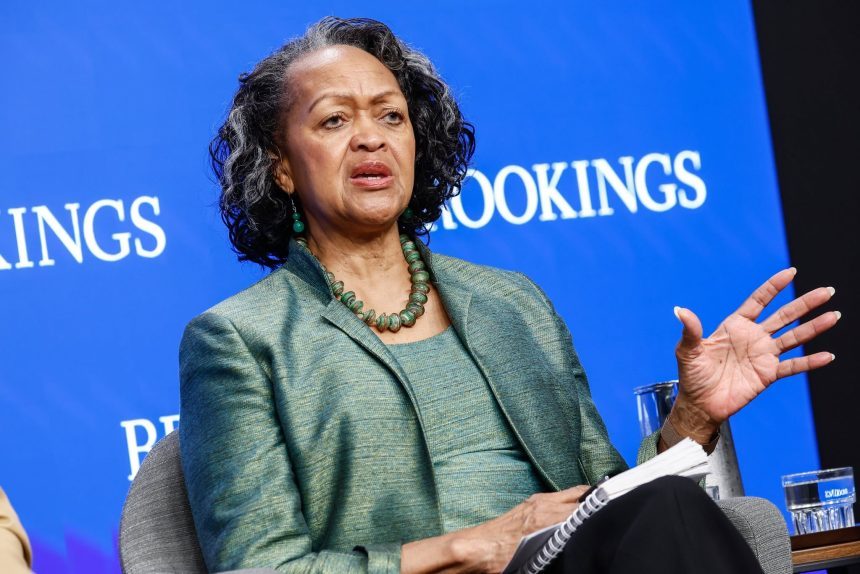
As the United States seeks to strengthen its economic footprint in an Africa increasingly courted by global powers, few platforms have been as consistent in bringing business, government and investment leaders together as the U.S.-Africa Business Summit.
This year’s gathering will take place in Mauritius from December 6–9 after the original July dates were postponed. For Florie Liser, President and CEO of Corporate Council on Africa (CCA), the change of dates has done little to diminish enthusiasm. Instead, she says the additional preparation time has strengthened the program and reinforced interest from companies, investors, governments and institutions on both sides of the Atlantic.
The stakes extend well beyond Mauritius. African countries have more choices of economic partners than ever before, while the African Continental Free Trade Area is creating opportunities for businesses to approach the continent through larger markets, regional value chains and integrated supply chains. For the United States, the challenge is no longer simply demonstrating interest in Africa, but competing with speed, financing, consistency and partnerships capable of delivering jobs, technology transfer and long-term value.
Liser believes the conversation has already shifted. Where American companies once debated whether they should invest in Africa, she says the questions today are increasingly about where to invest, how to structure partnerships and how to scale successful business models. At the same time, African partners are demanding relationships that go beyond transactions to embrace local manufacturing, workforce development and shared prosperity.
In this interview with Pan African Visions, Liser discusses preparations for the Mauritius Summit, the difficult decision to postpone the original gathering, expectations for business deals and high-level participation, the evolving U.S.-Africa commercial relationship, competition for African markets and the opportunities created by AfCFTA. She also reflects on her years at the helm of CCA and the legacy she hopes to leave in building stronger bridges between African and American businesses.
The 2026 U.S.-Africa Business Summit has been rescheduled for December 6–9 in Mauritius following the postponement of the original July dates. How are preparations progressing, and how confident are you that the Summit will deliver on the expectations that surrounded the original gathering?
Preparations are progressing exceptionally well, and I am more confident than ever that the Summit will meet and exceed the expectations that surrounded the original dates. The additional time has allowed us to strengthen every aspect of the program. We have continued working closely with the Government of Mauritius, our sponsors, partners, and stakeholders across Africa and the United States to build an even stronger agenda.
Interest in the Summit has remained remarkably strong. We continue to receive registrations from companies, investors, government officials, and institutions that recognize the value of bringing together decision-makers who can advance meaningful commercial partnerships. The enthusiasm has not diminished. If anything, it has grown.
Corporate Council on Africa’s mission is to connect, catalyze, and amplify U.S.-Africa trade and investment. The Summit will embody that mission by creating opportunities for companies to identify partners, governments to advance policy dialogue, and investors to explore commercially viable opportunities across the continent.
Postponing an event of this magnitude could not have been an easy decision, particularly given the considerable preparations already underway. Can you walk us through the consultations and considerations that ultimately convinced CCA and the Government of Mauritius that postponement was the responsible course of action?
It certainly was not an easy decision. Months of planning had already gone into the Summit, and both CCA and the Government of Mauritius were fully committed to delivering a successful event.
However, throughout the planning process, we remained in close consultation with the Government of Mauritius, public health authorities, our Board of Directors, sponsors, member companies, and other key stakeholders. While Mauritius itself remained free of Ebola, the Government made the prudent decision to implement temporary travel restrictions affecting travelers from countries experiencing outbreaks.
Given the international nature of our Summit, with delegates traveling from dozens of African countries as well as the United States and beyond, we recognized that these temporary restrictions could prevent important government officials, business leaders, and investors from participating. Rather than proceed with a Summit that would not provide the full level of engagement our participants expect, we jointly concluded that postponement was the most responsible decision.
The decision was driven by our commitment to inclusivity and ensuring that every stakeholder had the opportunity to participate fully in the conversations and business opportunities that define the Summit.
There were questions in some quarters about postponing a major U.S.-Africa gathering because of an Ebola outbreak concentrated in Central Africa, far from Mauritius. How would you respond to those who felt the decision risked reinforcing the tendency to treat Africa as one geographical and risk environment rather than 54 distinct countries?
That is an important question, and it is one we take seriously.
One of CCA’s core messages has always been that Africa is not a single market. It is 54 distinct countries, each with its own economy, investment climate, regulatory environment, and opportunities. We have spent decades helping American companies understand precisely that.
The decision to postpone should not be interpreted as suggesting that Mauritius or the African continent faced a generalized health risk. Mauritius was not experiencing an Ebola outbreak.
Rather, the postponement reflected the practical realities created by temporary travel restrictions that affected participation by delegates from several countries. Our responsibility was to ensure that the Summit could fulfill its purpose as a truly pan-African business gathering with broad representation from governments and the private sector.
We remain committed to promoting a more nuanced understanding of Africa and encouraging investors to evaluate opportunities based on the unique strengths and realities of each individual country.
Beyond the change of dates, what should participants expect from the December Summit in terms of the agenda, business deals, B2B and government engagements, and opportunities for companies seeking concrete partnerships in Africa and the United States?
Participants should expect exactly what has made the U.S.-Africa Business Summit the premier platform for commercial engagement between the United States and Africa.
The program will feature high-level policy discussions alongside practical business sessions focused on sectors including infrastructure, energy, health, finance, agribusiness, manufacturing, technology, tourism, and the blue economy. We will continue facilitating structured B2B meetings, government-to-business engagements, and networking opportunities designed to help companies identify partners and move projects forward.
Our experience has shown that many of the Summit’s most valuable outcomes occur not only during formal sessions but also through the relationships built in meeting rooms, networking events, and one-on-one conversations. Those connections often lead to investments, joint ventures, and long-term commercial partnerships.
Ultimately, the Summit is about creating opportunities that translate dialogue into action.
The Summit traditionally attracts African Heads of State, senior U.S. officials and major private-sector leaders. Which leaders and high-level delegations are confirmed or expected for Mauritius, and what does their participation tell you about the importance of the Summit?
We are pleased to have already confirmed the participation of two African Heads of State: The Prime Minister of the Republic of Mauritius, H.E. Dr. Navinchandra Ramgoolam, and The President of the Republic of Botswana, Duma Boko. These early confirmations reflect the significance that African leaders place on the U.S.-Africa Business Summit as the premier platform for advancing trade, investment, and commercial partnerships between the United States and Africa.
We are also actively engaging with several additional Heads of State, ministers, senior U.S. government officials, development finance institutions, and private-sector leaders from both Africa and the United States, and we expect to announce more high-level participants in the coming weeks.
The continued commitment from leaders across government and business underscores the unique role the Summit plays. There are few forums where Heads of State, ministers, CEOs, investors, entrepreneurs, and policymakers come together with a singular focus on expanding trade and investment. That ability to convene decision-makers from both the public and private sectors is what has made the U.S.-Africa Business Summit the leading platform for strengthening commercial ties between the United States and Africa.
You have led Corporate Council on Africa through several U.S.-Africa Business Summits. Looking back at the Summits under your leadership, what changes have you seen in the substance of U.S.-Africa commercial engagement and in the way American companies now perceive opportunities across Africa?
The conversation has evolved significantly. When I first began leading CCA, much of the discussion centered on whether companies should invest in Africa. Today, the conversation is increasingly about where to invest, how to structure partnerships, and how to scale successful business models.
American companies have developed a much deeper appreciation for the diversity of opportunities across the continent. They recognize Africa’s growing consumer markets, expanding digital economy, abundant natural resources, entrepreneurial talent, and strategic importance within global supply chains.
At the same time, African businesses are increasingly seeking partnerships that emphasize technology transfer, local manufacturing, workforce development, and long-term value creation rather than purely transactional relationships.
I believe the commercial dialogue today is more sophisticated, more strategic, and much more partnership-oriented than it was a decade ago.
How would you assess the state of U.S.-Africa economic relations today? Where is progress most visible, and where does the United States still need to raise its game to remain competitive as African countries deepen commercial relationships with partners from across the world?
There is tremendous opportunity, but also significant work ahead.We have seen encouraging progress through initiatives that have expanded financing, strengthened commercial diplomacy, and increased engagement by U.S. companies. American businesses remain highly respected for their innovation, technology, transparency, and long-term commitment.
At the same time, global competition has intensified. African countries have many investment options today, and they are looking for partners who can move quickly, provide competitive financing, and deliver tangible economic benefits.
The United States must continue strengthening its commercial presence by expanding access to financing, supporting small and medium-sized enterprises, encouraging greater private-sector participation, and maintaining consistent engagement with African partners.
Long-term relationships require sustained attention, not episodic engagement.
With Africa pursuing greater continental integration through the AfCFTA and seeking investment that creates jobs, builds industries and adds value locally, what must the next generation of U.S.-Africa commercial partnerships look like if they are to deliver meaningful benefits on both sides?
The next generation of partnerships must focus on shared prosperity. African countries are increasingly prioritizing industrialization, regional value chains, local manufacturing, workforce development, and technology transfer. American companies are well positioned to contribute in each of these areas.
The African Continental Free Trade Area creates new opportunities for companies to think regionally rather than country by country. It enables businesses to build integrated supply chains and serve larger markets while supporting local economic growth.
The most successful partnerships will be those that combine American innovation, capital, and expertise with African entrepreneurship, talent, and market knowledge. That approach creates value for businesses while generating jobs and sustainable economic growth across the continent.
As you reflect on your tenure at the helm of CCA, what would you consider the defining achievements of your leadership, and what legacy would you ultimately like to leave in strengthening commercial ties between the United States and Africa?
I am proud that CCA has strengthened its position as the leading business association dedicated exclusively to advancing U.S.-Africa commercial engagement.
Over the years, we have expanded our membership, strengthened relationships with governments across Africa and the United States, elevated the profile of the U.S.-Africa Business Summit, and created new platforms for companies of all sizes to engage meaningfully with African markets.
Perhaps most importantly, we have consistently demonstrated that trade and investment are powerful drivers of economic development, job creation, and shared prosperity.
If there is one legacy I hope to leave, it is having built stronger bridges between American and African businesses while fostering relationships based on mutual respect, partnership, and long-term collaboration.
Looking beyond Mauritius, how optimistic are you about the future of U.S.-Africa trade and investment, and what should governments and businesses on both sides be doing now to build a deeper, more balanced and more consequential economic partnership over the next decade?
I am extremely optimistic. Africa is home to some of the world’s fastest-growing economies, a young and dynamic workforce, expanding infrastructure, remarkable innovation, and enormous entrepreneurial energy. These trends present tremendous opportunities for businesses that are prepared to engage for the long term.
Governments should continue creating transparent, predictable business environments while investing in infrastructure, education, and regional integration. Businesses, for their part, should view Africa as a strategic, long-term partner rather than simply an emerging market.
The future of U.S.-Africa commercial relations will be shaped by collaboration, innovation, and sustained engagement. If we continue building partnerships that create value on both sides, I believe the next decade can be the strongest period yet for U.S.-Africa trade and investment.
That is precisely why Corporate Council on Africa remains committed to connecting business leaders, catalyzing investment, and amplifying opportunities that benefit both Africa and the United States. (Source: Pan African Visions/Buziness Africa)