

Can Trump’s New Tariffs Weaken China’s Grip on Global Trade?
Washington's latest tariffs keep the truce with Beijing alive but leave room to escalate, and press other economies to curb their dependence on Chinese manufacturing.
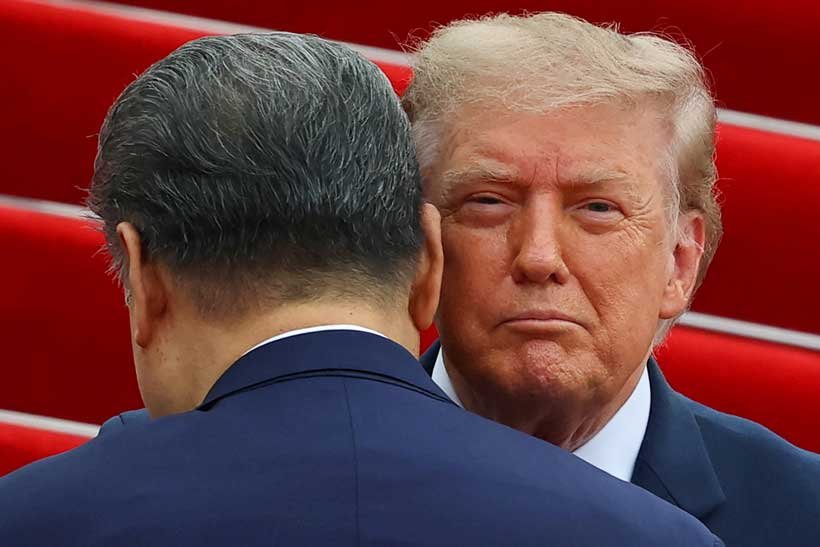
US President Donald Trump’s latest tariff measures are intensifying pressure on China and its international trading partners, as Washington seeks to reshape global trade flows and reduce Beijing’s influence over manufacturing and industrial supply chains.
The new tariffs maintain the current trade truce between Washington and Beijing but leave room for further increases, creating fresh uncertainty ahead of another planned meeting between the two countries’ leaders in Miami next month and the January 10 expiry of their trade agreement.
The measures reflect a broader shift in US trade policy. Rather than targeting Chinese exports alone, the Trump administration is increasingly pressuring other economies to strengthen trade restrictions against Beijing and limit their dependence on Chinese manufacturing.
According to the latest US plans, tariffs on Chinese goods could increase by 20 percentage points on top of the existing 25% levies introduced during Trump’s first presidency. This would bring the potential combined tariff burden to 45% if the current trade arrangement breaks down.
China’s Foreign Ministry has rejected US accusations concerning unfair industrial practices but has not announced retaliatory measures in response to the latest tariff decision.
Washington Expands Its Pressure on China’s Trading Partners
The latest measures follow an eight-month US investigation into alleged unfair trade practices and excess industrial capacity across the global economy.
Although the investigation examined several economies, China remains Washington’s central concern because of its manufacturing capacity, export strength and growing influence over international supply chains.
The Trump administration is also extending pressure to countries with which Washington already has trade agreements or is negotiating new arrangements, including the European Union, Japan and several Southeast Asian economies.
US trade officials argue that these partners are not doing enough to restrict Chinese imports and investment, potentially allowing Beijing to redirect exports through third countries to avoid American tariffs.
The extent of Washington’s focus on China is reflected in its trade investigations. The US Trade Representative’s report on Vietnam reportedly mentions China more than 250 times, while its findings on the European Union refer to China more than 300 times.
This approach suggests that Washington wants its trading partners to take a more active role in limiting China’s access to international markets.
For countries caught between the world’s two largest economies, however, complying with American demands could create difficult economic and diplomatic choices. Many depend on Chinese imports, investment and manufacturing networks while also relying on access to the US market.
Will US-China Relations Face Another Trade Confrontation?
Trump’s latest tariff strategy comes after a major setback to his earlier attempt to reshape international trade through the so-called Liberation Day tariffs introduced in April 2025.
The US Supreme Court subsequently declared those tariffs illegal, forcing Washington to reconsider its approach to imposing broad trade restrictions.
The earlier tariff campaign triggered a sharp confrontation with Beijing. China responded with significant retaliatory measures, while Washington and Beijing briefly escalated reciprocal tariffs to triple-digit levels.
China also demonstrated its leverage through restrictions on rare earth exports. Its dominant position in rare earth processing gives Beijing considerable influence over industries ranging from automobile manufacturing to defence production.
Subsequent negotiations and meetings between the two countries’ leaders helped stabilise relations and establish a temporary trade truce.
Recent developments suggest that both governments remain interested in maintaining that arrangement. Beijing has extended its suspension of rare earth export controls affecting the United States, while China Southern Airlines has announced that its subsidiary Xiamen Airlines agreed to purchase 50 Boeing 737 MAX 8 aircraft.
Trump’s recent visit to China also indicated an effort by both sides to maintain diplomatic engagement despite continuing economic disagreements.
However, the latest tariff measures preserve Washington’s ability to increase economic pressure if negotiations deteriorate.
For the United States, this provides additional leverage in future trade discussions. At the same time, significantly higher tariffs could increase import costs and place further pressure on American consumers.
The domestic economic implications are particularly important for Trump, whose Republican Party suffered a major setback in the November midterm elections, with the cost of living emerging as a central voter concern.
Higher tariffs could therefore create political difficulties if businesses pass additional import costs on to consumers.
China’s Trade Surplus Creates Pressure Beyond Washington
The growing US-China trade dispute also has implications for other major economies. Previous tariff increases demonstrated that when Washington restricts Chinese exports, China’s trade surplus with the United States can decline while its surpluses with other trading partners expand.
This creates additional pressure on governments whose domestic industries face competition from relatively inexpensive Chinese manufactured goods.
Critics of Beijing’s economic model argue that weak domestic consumption and continued dependence on exports have contributed to China’s growing trade imbalances.
They contend that China’s manufacturing output exceeds the capacity of its domestic market to absorb production, encouraging companies to seek demand abroad and intensifying competition with foreign manufacturers.
This has become an increasingly contentious issue for economies concerned about industrial competitiveness, employment and the long-term viability of domestic manufacturing.
Viktor Shvets, a global strategist at Macquarie Capital, argued that China’s difficulties in restructuring its economy could become an even greater source of international trade tensions than fluctuations in American tariff policy.
The implications could extend well beyond the United States, particularly as more governments consider protective measures to defend domestic industries.
The European Union Considers Stronger Trade Protections
The European Union is among the economies facing growing pressure from China’s expanding exports. Brussels has already negotiated arrangements with Beijing involving quotas on certain Chinese electric vehicle imports, reflecting European concerns about competition in the automotive sector.
The agreement illustrates how trade disputes can also produce negotiated compromises rather than escalating into prolonged tariff confrontations.
However, European policymakers are considering additional measures to address concerns over industrial competition and trade imbalances.
For Beijing, maintaining access to major international markets will require balancing its export ambitions with the concerns of trading partners seeking greater protection for domestic industries.
China’s willingness to negotiate on electric vehicle imports demonstrates that it may accept concessions when the economic and diplomatic costs of confrontation increase.
Further compromises could therefore emerge as European and Asian governments seek to protect their industries without completely disrupting commercial relations with Beijing.
A Changing Landscape for Global Trade
Trump’s latest tariff measures reflect a broader transformation in international economic relations, where trade policy is increasingly being used as an instrument of geopolitical influence.
Washington is not simply attempting to reduce its trade deficit with China. It is also seeking to reshape international supply chains by encouraging other economies to reconsider their economic dependence on Beijing.
This strategy could accelerate the fragmentation of global trade into competing economic networks, particularly if governments introduce additional tariffs, investment restrictions and non-tariff barriers.
For China, the challenge will be maintaining export growth while managing resistance from trading partners concerned about manufacturing competition and trade imbalances.
For the United States, the central difficulty will be applying economic pressure without increasing domestic inflation or damaging relationships with countries that remain deeply integrated into Chinese supply chains.
Ultimately, the future of US-China trade relations will depend on whether both governments can preserve their current arrangement or move towards another confrontation. Even if Washington and Beijing avoid a direct escalation, their competing economic priorities are likely to place increasing pressure on other countries to reconsider their positions within the global trading system.
With information from Reuters.
Sana Khan is the News Editor at Modern Diplomacy. She is a political analyst and researcher focusing on global security, foreign policy, and power politics, driven by a passion for evidence-based analysis. Her work explores how strategic and technological shifts shape the international order. (Source: Modern Diplomacy/Buziness Africa)