
Determining African Union's Future in a Changing Geopolitical World
Years of policy on peace and development have not ended Africa's conflicts. Professor Maurice Okoli on what the African Union's new leadership must change.
Unbelievable! Several years of throttling with policy phrases of peace and security, economic development and growth, and yet Africa has been entangled in persistent ethnic conflicts and largely falls short of the expected level of economic development. Leaders of the African Union (AU) have been struggling to establish sovereignty for its 55-member-states, the right to fundamental principles of self-determination and the possibility for transforming the economy by utilising the huge endowed natural resources. These, among others, have been the central focus over the years. Until today, the fundamental principle of forging unity, the basic condition for an incredible development, has eluded Africa.
African Union - Recipient of Foreign Assistance
With the dawn of this new geopolitical situation, United States has scaled back financial assistance to the African Union. As part of its African policy, President Donald Trump’s executive order that aims at cutting financial assistance must be extended to African Union, and the Regional Economic Organisations. This strategic step will reshape the relationships to conform to the dictates of emerging new world (dis)order and the new economic architecture of the Global South. Over the years, the African Union and the Regional Economic Organisations have only used foreign funding to supervise political governance fraught with multiple opaque transactions, foreign funds have perpetuated poverty and inequality in the continent. Meanwhile, research analysts say African leaders have disregarded the guiding principles of transparency and accountability in their organisational activities, working attitudes directed at spending financial packages invariably enforcing the growth of neo-colonial tendencies. Ultimately, the experts considered Trump’s executive decision as a blessing in disguise, as it may create a chapter for an opportunity to now prioritise responsibility, transparency and accountability for exploiting natural resources.
Africa’s Human Capital and Natural Resources
As leaders navigate the evolutionary processes on the terrain, it necessary not to lose sight of the fact that Africa has, most often, is described as a wealthy continental with tremendous resources which have attracted external power, even during the time of colonialism. Leaders have taken many post-colonialism questions for granted, utterly engulfed in foreign instructed directions of development that have been inseparably tied to loans and financial assistance and humanitarian support. At least, between 2000 and 2025, a full quarter of this century, African has trained economists and specialists, enough to chart the present-day Africa’s development parameters.
Most often reiterated that Africa, the world’s second-largest and second-most populous with nearly 1.4 billion people as of 2024 after Asia, is a promising continent for investment, its geographic location between the West and West presents, within some frameworks, significantly strategic interests for economic collaboration with foreign players. But, it has increasingly become competitive landscape and there are already too many foreign players including China and other Asian countries, and giant western powers, since the end of the Cold War, and the unforgettable Soviet’s collapse in 1991.
Reports frequently point to Africa’s tremendous, yet untapped, natural resources including its reserves of bauxite, manganese, uranium, earth metals, platinum, coltan and cobalt, petroleum, oil and gas, and many more. Despite several factors impeding the continent’s expected level of development, recent economic expansion and a large and young population make Africa an important economic market in the broader global context.
Perennial Obstacles
Scholars have also attributed different factors to the attraction of players, significantly resulted in the growth of neo-colonial tendencies and practices. The great of the factors is lack of negotiations and opacity on the part of African leaders, which scholars described as “completely unacceptable” in spite of high grades of education and overwhelming experiences and skills acquired in the sphere of politics, economy and in the society.
Until today, the continent is seemingly suffering from lack of standard infrastructural or industrial development, along with continuous political instability. With limited financial resources and/or access to global markets, only a handful of African countries can be considered as successful in obtaining rapid economic growth until 2025. Perhaps, the starkest sign in a in current scenario for U.S. and Europe to rethink of their bilateral relationships, as there are also new wave of anti-western sentiments and rhetoric, but this would have, more or less, impact negatively on development of most African countries close-knitted to multilateral financial institutions and organisations. In this case, China, during the past three decades offered a great increased investment into many African nations, which further spurred economic growth.
During the launch of a report on Chinese investment in Africa, Wang Dong, deputy head of the ministry’s Department of Western Asia and African Affairs, said Chinese companies have carried out infrastructure projects worth over $400 billion in Africa. In addition, companies have expanded their investment in the continent from traditional sectors, including construction, mining and manufacturing, to emerging industries, such as logistics, digital economy, clean energy, health, green development and finance. According to that official report, in 2023, China’s goods trade with Africa totaled $240 billion, while U.S.-Africa trade totaled $47 billion, Russia-Africa was as low as $18 billion.
Understanding African Union’s Reforms
At the height of the current geopolitical situation, African leaders and corporate business executives, certainly, have to face the primary objective facts and realities, pursue pragmatic policies aim at enhancing multidimensional ties with foreign countries. With the the change of AU’s chairperson on February 25, and ushering in new team of commissioners, in the first place, serves as a new impetus for further development of continental unity. The existing key tasks, that need innovative solutions fr a full range of African issues, are still the pursuit of finding sustainable peace and security, addressing economic development shortfalls and, most importantly, raising living standards of the large impoverished population (65%) across Africa. Anything short of these, implies a continuation of stagnation, maintaining the widening gap between Africa and the developed world.
In the eyes of the rest of the world, Africa would inevitably be viewed as a continent of poverty, endless wars and epidemics, stuck in the pre-industrial stage of development, and surviving only thanks to international aid and all kinds of western assistance.
February 25th Change Over
That the dawn set to make transition for a new AU leadership, to a large degree, would undertake unprecedented reforms, to determine the future of Africa, especially taking cognizance of the current global reconfiguration, as Chairperson Moussa Faki Mahamat whose second term of office ends in February 2025. Moussa Faki, born on 21 June 1960, was first time elected as the African Union Commission (AUC) Chairperson on 30 January 2017 and assumed office in March 2017. He served previously as State Minister of Foreign Affairs for the Republic of Chad.
As the history stipulates, the flagship position of AU chairperson is fixed for a four-year term, renewable only once. According to official documents researched, the Chairperson of the AUC is the Chief Executive Officer. In broad terms, the Chairperson’s functions include overall responsibility for the Commission’s administration and finances; promoting and popularising the AU’s objectives and enhancing its performance; consulting and coordinating with key stakeholders like member states, development partners, Regional Economic Communities (RECs); appointing and managing Commission’s staff; acting as a depository for all AU and OAU treaties and legal instruments.
The government of the AU consists of all-union, regional, state, and municipal authorities, as well as hundreds of institutions, that together manage the day-to-day affairs of the institution. The AU reports indicate its revenue sources and resources for implementing its programmes and operations as contributions from members and, to a large extent, dependence on external partners including the United States and Europe.
What’s Ahead for AU’s New Leadership
For the new leadership, in particular, it is a critical time to seriously consider appropriate, if not drastic, invaluable measures toward transforming the political, economic, and cultural diversities into continental strength to ensure an impactful development and substantial growth, instead of a noticeable display of weaknesses and passive actions.
Narratives, mostly among experienced researchers and prominent political experts as well as the entrepreneurial community, inside Africa pointed to the adoption of a far-reaching overhauled approach and take unshakable measures toward most significant issues across Africa. In addition, the AU has to take on greater development responsibilities to make - “Africa We Want” - a in complete visible reality. These are essential conditions for re-imaging and re-branding the AU’s future.
Notwithstanding the persistent challenges, the AU listed its priorities, among others, for 2025 as follows: (i) exploring new ways to address governance crises and deal with ethnic conflicts to ensure stability (ii) the AU, as a member of the Group of 20 major economies, use its position to set up a common framework for helping heavily indebted poor African countries (iii) encourage and coordinate economic and industrial development (iv) intensify the African Continental Free Trade Area (AfCFTA) and (iv) re-invigorating diplomacy with foreign countries.
Invaluable Summary
For the best critical option in the light of unstoppable evolutionary global situation, we have to make a transition beyond “business-as-always” norm, we have to collectively build a different Africa – Africa with rapid economic growth (at least 5% or even through strategic mechanisms, more than that percentage per year), dynamic formation of democratic systems, modern structures and institutions in the market of natural and human resources, a key source of growth in global demands, profitable spheres of diversified investment operations. Doubtless to suggest, in this article, that the African Union needs to make a fundamental shift in its whole strategy in this rapidly changing world. There is, with an objective assessment, that by re-activating the potential capabilities combined with appropriate strategies, Africa by the end of the next quarter in 2050 will be admirable and have a noticeable change for generations.
**
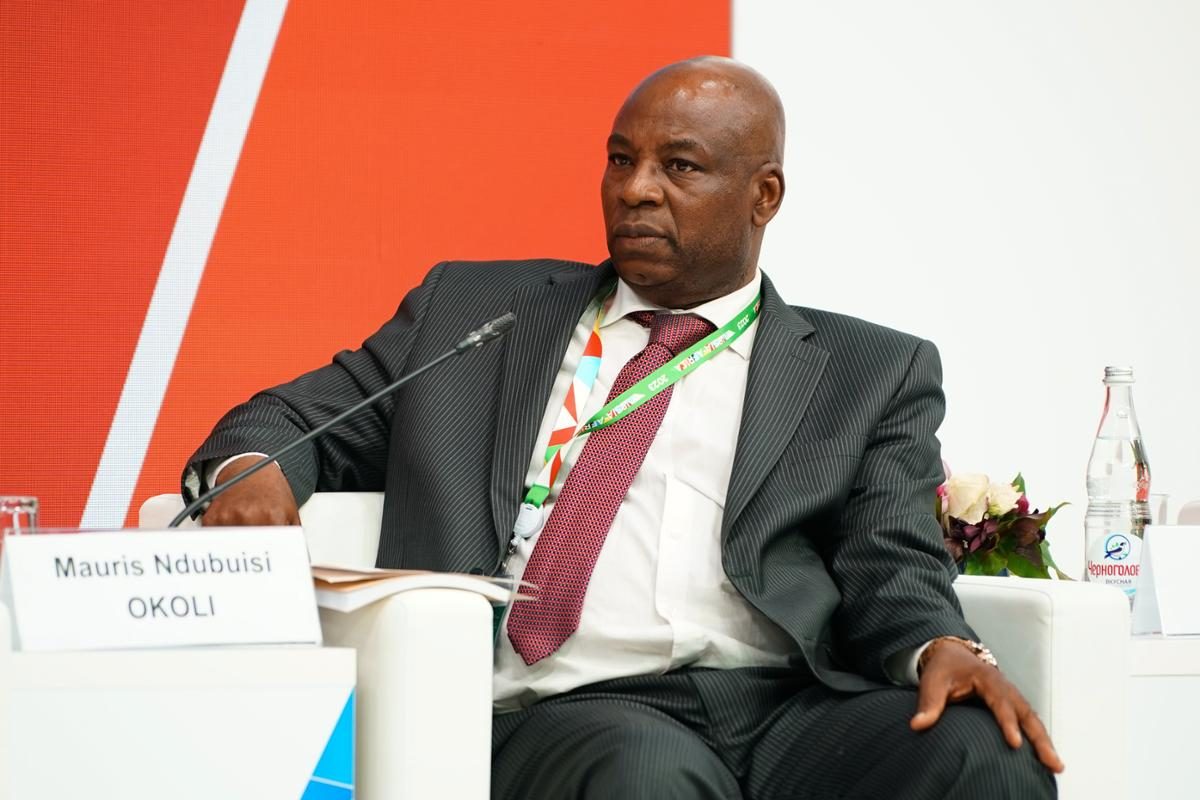
Professor Maurice Okoli is a fellow at the Institute for African Studies and the Institute of World Economy and International Relations, Russian Academy of Sciences. He is also a fellow and lecturer at the North-Eastern Federal University of Russia. He serves as an expert at the Roscongress Foundation and the Valdai Discussion Club.
As an academic researcher and economist with a keen interest in current geopolitical changes and the emerging world order, Maurice Okoli frequently contributes articles for publication in reputable media portals on different aspects of the interconnection between developing and developed countries, particularly in Asia, Africa, and Europe. With comments and suggestions, he can be reached via email: markolconsult (at) gmail (dot) com. (Source: Buziness Africa)