
G20–Africa: Innovating Agenda for the Global South's Development
For the first time an African nation is steering the G20. What South Africa's presidency means for the continent and the Global South.
For the first time in its history, an African nation is steering the G20. South Africa’s presidency of the powerful grouping comes at a moment of shifting geopolitics and rising expectations from the Global South. It coincides with the African Union’s full membership in the G20, granted in 2023—a development hailed as a milestone for Africa’s voice in international governance.
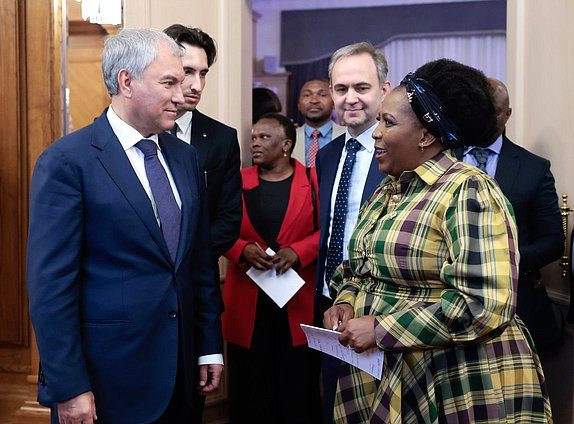
In mid-August, Ms. Tandiwe Thelma Mgxwati, Minister Plenipotentiary and Chargé d’Affaires a.i. at the South African Embassy in Moscow, reflected on what this means for Africa and the broader Global South in an exclusive interview. She outlined how Pretoria plans to use its presidency to advance African priorities in global economic decision-making.
“A profound historical and geopolitical moment”
Q: What is the significance of South Africa’s presidency of the G20 in 2025?
Mgxwati: South Africa’s presidency of the G20 in 2025 is of profound historical and geopolitical significance. It is the first time an African country has led the G20 at the Summit level since its inception in 1999, and it comes just two years after the African Union became a permanent G20 member.
This presidency symbolises recognition of Africa’s role in the global economy and the need for inclusive, representative international governance frameworks. For South Africa, it is a platform to assert the voice of the Global South and to shape multilateral responses to inequality, climate change, sovereign debt, and technology governance.
With the G20 Johannesburg Summit scheduled for 22–23 November 2025, South Africa’s presidency provides an opportunity for Africa to shape global discussions on sustainable development during what is often called a time of “polycrisis.”
Importantly, South Africa is taking the G20 presidency beyond its borders. Three major continental events are planned: Egypt (Food Security), Ethiopia (Compact with Africa), and Nigeria (Industrialisation and Agriculture).
Background: Africa and the G20
Africa’s relationship with the G20 has been long and uneven. South Africa joined the group at its creation in 1999, giving the continent a single seat at the table. For years, Pretoria was both participant and messenger, carrying the concerns of 54 nations while being just one voice among 20.
The Seoul G20 Summit in 2010 marked the first real effort to integrate Africa into the G20 agenda, introducing a “Development Consensus” that prioritised infrastructure and food security. But implementation was thin, and critics argued that Africa’s voice remained marginal.
In 2017, Germany launched the Compact with Africa (CwA), a flagship initiative to encourage private investment. While promising, it was criticised for being donor-driven and insufficiently aligned with African priorities.
The game-changer came in September 2023, when the African Union (AU) was granted permanent membership of the G20 during India’s presidency. The AU’s accession meant that Africa now speaks as a bloc, not just through South Africa. This raised hopes that Africa could reshape G20 discussions on trade, climate finance, and debt reform.
South Africa’s 2025 presidency thus arrives at a critical moment: it is the first real test of whether AU membership can translate into concrete outcomes.
“Solidarity, Equality, Sustainability”
Q: How does South Africa plan to push Africa’s development ambitions within the G20?
Mgxwati: Our presidency theme—“Solidarity, Equality, Sustainability”—captures the urgency of addressing historical imbalances, promoting inclusive growth, and tackling existential threats like climate change.
We have created three task forces:
- Inclusive economic growth, industrialisation, and job creation.
- Food security, a pressing African concern.
- AI governance and innovation for sustainable development.
These priorities are fully aligned with the African Union’s Agenda 2063 and the UN Sustainable Development Goals.
To ensure African priorities are heard, South Africa has institutionalised engagement with the AU Commission, the African Development Bank, and other continental bodies. The revitalised G20 Africa Advisory Group now advances Africa’s voice in the G20’s Sherpa Track.
We are also working with BRICS partners, the G77, and Africa’s regional economic communities to build a unified stance on debt restructuring, concessional finance, and technology transfer.
Within the Finance Track, South Africa has initiated a review of the Cost of Capital—a critical issue, since many African nations face unsustainable debt burdens.
From Aid to Partnership
Q: How do you assess G20 members’ willingness to boost economic partnership with Africa?
Mgxwati: There is growing recognition in the G20 that Africa must be seen not as an aid recipient but as a partner for mutual prosperity.
South Africa is pushing for transformative partnerships that build industrial capacity, human capital, and integrated infrastructure. This means investment in regional value chains, climate-resilient agriculture, and sustainable energy systems. We are also advocating for fairer access to capital through reforms of multilateral development banks and global credit rating systems.
A central part of our agenda is revamping the Compact with Africa (CwA), first launched under Germany’s 2017 G20 presidency. In September, South Africa will host a G20 event in Addis Ababa to strengthen the CwA, ensuring it aligns with African priorities and supports the African Continental Free Trade Area (AfCFTA).
Tackling Africa’s Structural Challenges
Q: Do you think South Africa’s G20 presidency can realistically tackle Africa’s challenges?
Mgxwati: Absolutely. Our presidency is expressly designed to address structural challenges—such as limited access to affordable long-term finance, vulnerability to climate shocks, and exclusion from global technology governance.
Through both the Sherpa and Finance Tracks, we are pressing for debt relief, concessional climate finance, and support for developing countries in leveraging critical minerals for sustainable growth.
We are also innovating by putting digital public infrastructure and AI governance on the G20 agenda. This ensures Africa has a say in how emerging technologies are governed globally. These priorities will be consolidated in a G20–Africa Action Plan with concrete deliverables and timelines.
Africa’s Expectations
Q: What does Africa expect from G20 members?
Mgxwati: Africa’s expectations are anchored in fairness, equity, and mutual interest.
We expect support for reforming the international financial architecture, especially voting rights in Bretton Woods institutions, sovereign debt restructuring, and concessional finance.
Infrastructure, digital transformation, industrialisation, and innovation ecosystems remain central—these are the backbone of Agenda 2063 and national development plans.
Africa also expects greater investment in its energy transition, including recognition of natural gas as a transitional fuel, alongside financing for climate adaptation. Partnerships should create jobs, build local value chains, and integrate Africa into global supply networks.
Above all, Africa’s voice in shaping rules on trade, climate, AI, and finance must be amplified. The AU’s G20 membership must deliver real institutional reform, not just symbolism.
The U.S. Factor
Q: Could shifting South Africa–U.S. relations affect these expectations?
Mgxwati: South Africa’s foreign policy is rooted in sovereignty, multilateralism, and global equity. While President Donald Trump’s administration has taken a protectionist turn—including 30% tariffs on selected South African exports—we continue to engage with all G20 partners, including the U.S.
The U.S. will take over the G20 presidency from us in 2026, so its involvement is critical to the continuity of our work. We have noted Washington’s rhetoric on issues such as land reform, BRICS, and South Africa’s global posture, but these tensions do not alter Africa’s structural development needs.
The agenda we are advancing—fairer trade, access to finance, climate adaptation, and inclusive technology governance—is collective and long-standing, shaped by Africa’s priorities, not bilateral disputes.
We believe South Africa is uniquely positioned to lead the G20 at this moment. Our experience in building an inclusive democracy in the 1990s serves us well as we navigate today’s geopolitical complexities.
Beyond G20: Africa’s Multilateral Leverage
The G20 is not Africa’s only platform. The continent’s engagement with BRICS (Brazil, Russia, India, China, South Africa) has deepened, with Egypt, Ethiopia, and Nigeria invited into an expanded BRICS+ in 2024. The G77 remains a critical bloc in the UN system, while the African Union’s Agenda 2063 provides a continental blueprint.
What distinguishes the G20 is its mix of developed and emerging economies and its influence over 80% of global GDP. With the AU now a permanent member, Africa has a more substantial base to push reforms in global trade, finance, and climate governance.
If leveraged effectively, the G20 can complement—not compete with—Africa’s other multilateral engagements, creating synergies rather than duplication.
A Continental Presidency with Global Stakes
South Africa’s G20 presidency is more than a diplomatic milestone. It is a stress test of Africa’s ability to shape global rules, not just adapt to them. By aligning continental priorities with the G20’s agenda, Pretoria is trying to ensure that Africa is no longer at the margins of global decision-making.
The stakes are high. Debt, climate change, and technology governance are existential challenges for the Global South. How the G20 responds under South African leadership could set the tone for the coming decade—either reinforcing old inequities or opening a path toward a fairer, more inclusive global order. (Source: Buziness Africa/WorldView)