- Home
- News
- Interviews
Russia-Ghana: Consolidating Traditional Partnership and Economic Collaboration
Russia's Ambassador to Ghana, Andrei Ordash, on trade, nuclear energy, security and what Ghanaians can expect from closer ties with Moscow.
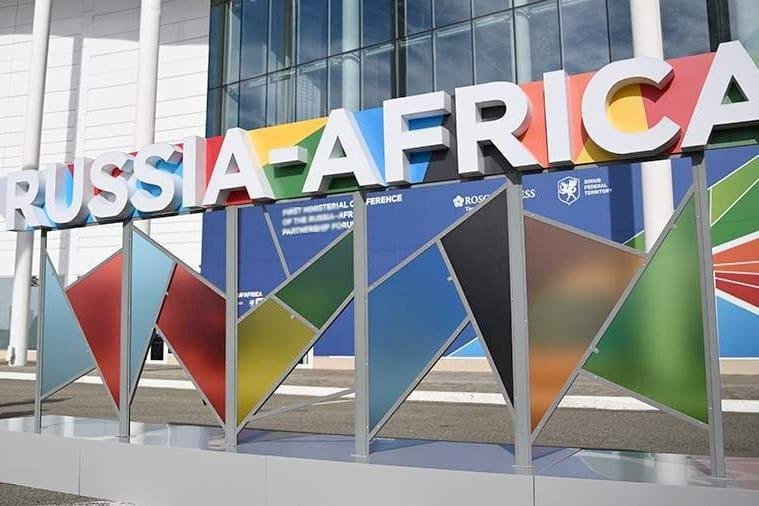
The full text of the interview with H.E. Mr Andrei Ordash, Russian Ambassador to Ghana, for the Ghanaian newspaper “Daily Graphic”
1. Ghana—Russia relations: How will you describe the cooperation of the two countries over the decades?
Relations between Russia and Ghana are built on a very solid historical foundation. Diplomatic relations between the Soviet Union and Ghana were established shortly after Ghana declared its independence, and from the very beginning our country regarded Accra as one of its key partners in Africa.
Cooperation was particularly close during the presidency of Kwame Nkrumah. The Soviet Union supported Ghana’s aspirations to strengthen its political and economic independence, pursue an independent foreign policy and overcome its colonial legacy. This cooperation took concrete forms in the fields of industry, energy, education, medicine and culture. Thousands of Ghanaian citizens received education and vocational training in the Soviet Union, and many of them subsequently made a significant contribution to the development of your country.
Therefore, when we speak of current Russian-Ghanaian relations, we are not talking about building a partnership from scratch. Our countries already share a long-standing human, political and professional capital. Many Ghanaian specialists who hold today senior positions have ties with Russia.
In recent decades, of course, relations have undergone a major transformation. The international system, Russia’s economy and the very structure of our ties have all changed. However, the political dialogue between Moscow and Accra has been maintained, and the foundation laid over previous decades allows us to gradually shape a new agenda.
Here is a very recent example. In August 2026, Ghana’s Minister for Foreign Affairs, Hon. Samuel Okudzetu Ablakwa, visited Moscow and held talks with Russia’s Minister for Foreign Affairs, Mr Sergey Lavrov. The parties discussed promising areas for cooperation, as well as preparations for the ‘Russia–Africa’ summit. An agreement was signed on visa-free travel for holders of diplomatic and service passports.
Our task now is not simply to maintain the good relations that have developed in the past, but to infuse them with new substance. Our historic friendship is important, and it must serve the contemporary interests of our countries.
2. What are the latest areas of focus in Russia-Ghana cooperation and over what period?
As regards the current agenda, I would, first and foremost, highlight trade and economic cooperation, energy, agriculture, mining industry, education, scientific and technical cooperation and, of course, cooperation on a wide range of international issues, including security, taking into account developments in West Africa.
It is important to understand, however, that this is not a list of isolated areas. We would like to see them gradually become interlinked and form a sustainable partnership.
A telling example of such a partnership is linked with the adoption in March this year by the UN General Assembly of a resolution initiated by Ghana, recognising the transatlantic trade in enslaved Africans and racial slavery as the gravest crime against humanity and calling for further measures to restore historical justice. Russia supported this resolution without the slightest hesitation. European states today actively make statements on international law, historical responsibility and the need to protect human rights; however, when Ghana proposed giving the issue of the transatlantic slave trade concrete political significance and raising the question of restoring historical justice, most European countries chose to abstain.
Incidentally, on the subject of education. I would describe this area as key. Without qualified national specialists, it is impossible to implement any energy project, modern industrial programme, digital transformation or development of the mining sector. In the 2026/2027 academic year, Russia intended to offer 120 government scholarships to Ghanaian students; however, just a few days ago, this number was increased by a further 117, including 97 scholarships for specialists in agriculture. Direct partnerships have been established between Russian and Ghanaian higher education institutions. Over 500 Ghanaians are studying Russian at the University of Ghana in Accra alone.
As for timelines, I would not set an artificial five- or ten-year plan for all areas of Russian-Ghanaian cooperation. They have different timeframes.
Expanding trade and business-to-business contacts may yield results in the very near future. Setting up joint ventures, localising production and implementing investment projects will take several years. Meanwhile, the energy sector, large-scale industrial infrastructure, the training of specialists and the development of a scientific and technological base are projects designed to span decades.
It is precisely this long-term approach that we consider to be the most sensible. Russia is not interested in a series of short-term deals, but rather in ensuring that, in a few years’ time, Russian-Ghanaian cooperation has a much deeper structure than it does today.
3. Trade and investment: Ghana-Russia trade relation has grown significantly in recent years. From $247 million in 2022 to more than $800 million in 2024. What concrete investments are Russia and Russian businesses prepared to make in Ghana beyond the supply of fertiliser, petroleum products and grains?
Indeed, trade growth in recent years has been very substantial. Trade turnover increased more than three and a half times between 2022 and 2024. The main drivers were Russian supplies of petroleum products, foodstuffs and fertilisers. In 2026, following a slight decline, our trade relations are once again showing positive momentum: in the first half of the year, trade turnover rose by 2.1 per cent compared with the same period in 2025, with Russian exports to Ghana increasing by 11.5 per cent. But I would like to make an important point straight away: for Russia, an increase in trade turnover is not an end in itself. If Russian-Ghanaian relations are limited to the export of Russian grain, fertilisers, petroleum products and other goods, we will be utilising only a small fraction of the available potential.
Our task is to gradually move away from a model in which one side mainly sells and the other mainly buys, towards a more complex model involving joint investment, production, processing and technological cooperation.
One of the most promising areas here is the mining industry and geological exploration. Ghana possesses significant mineral reserves and is one of Africa’s leading gold producers. Russian companies and research organisations possess expertise in geology, geophysics, mining machinery, and the extraction and processing of raw materials. We can therefore discuss more complex projects in this area.
Russian companies are already keen to expand their supplies of food and fertilisers to African markets, including Ghana. But here too we see scope to go further. This could include projects involving food processing, the supply of agricultural machinery and technology transfer.
Our country has capabilities not only in the supply of energy resources, but also in engineering services, equipment and the implementation of major energy projects.
The Russian side is keen for our businesses to view Ghana not only as a sales market, but also as a place for localising certain production and service operations. Ghana’s potential as a member of the African Continental Free Trade Area is of particular interest here: manufacturing in Ghana potentially enables us to access the wider African market.
However, I would like to be precise here. We must not give the impression that all the projects listed are already investment contracts ready for signing. That would be incorrect. The initiatives are at the stage of preliminary negotiations, market assessment, the search for partners and the determination of commercial terms.
4. Energy and infrastructure: There is an MoU between Ghana and Russia regarding a project to build a nuclear power station in Ghana, with the involvement of Russian specialists. How far have the two sides gone with this project and how prepared is Russia to support Ghana with major infrastructure projects such as in energy, nuclear power or technology? What specific projects are currently under discussion?
It is important here to distinguish between the existing contractual and legal framework and the final decision on the construction of a nuclear power station.
In 2015, Russia and Ghana signed an intergovernmental agreement on cooperation in the peaceful use of nuclear energy. This provides for cooperation on a wide range of issues, establishing a legal framework for Russia’s participation in the construction of Ghana’s first nuclear power plant. The memorandum signed in 2012 between the Russian state corporation Rosatom and the Ghanaian Ministry of Energy pursues the same objectives.
Ghana itself has made significant progress in recent years in developing its national nuclear energy programme. Russia is keen to participate in this process. During recent Russian-Ghanaian talks at the level of foreign ministers, nuclear energy was once again identified as one of the promising areas for cooperation.
However, I would like to emphasise that the final choice of foreign partners, technology, capacity, financial model, timelines and other parameters lies solely within the competence of the Ghanaian side.
Russia’s proposal is to provide Ghana with the full range of solutions required to establish a nuclear power sector. This goes beyond the power unit itself. It includes the training of specialists, engineering and scientific support, design, construction, operation, maintenance and the development of national expertise.
The issue of staff training is particularly important for Ghana. If the country decides to develop a nuclear power sector, it must simultaneously establish its own training programme for specialists – engineers, physicists, and experts in radiation safety, operations and regulation. Russia has extensive experience in this field and is ready to share it.
As for the broader energy and infrastructure agenda, the opportunities here are not limited to nuclear power either. Russia can offer expertise in power engineering, engineering services and much more.
5. Russia and Africa: Russia is seeking a stronger presence across Africa. The forthcoming Russia-Africa Summit in Moscow in October seeks among others to consolidate Russia’s partnership with Africa. What does Moscow want Ghana’s role to be in its broader Africa strategy, and how is this different from the approach of China, the United States or Europe?
First of all, I would like to emphasise that Russia does not view its relations with Africa as a temporary focus of its foreign policy, nor as a reaction to the current international situation. For us, this is a long-term partnership based on historical ties, mutual respect and, most importantly today, shared interests.
Africa is changing very rapidly. African countries are becoming important decision-making centres; their economic and political influence is growing; and African states themselves are actively shaping their own approaches to issues of international security, trade, development and the reform of the global financial system.
Russia welcomes this process. We believe that African states must be able to determine for themselves with whom and in which areas they wish to cooperate. That is precisely why we advocate a multipolar world and fairer representation of African countries in international institutions, first and foremost in the United Nations.
In this context, the forthcoming Russia–Africa summit, to be held on 28–29 October 2026 in Moscow, is of particular significance to us. This will be the third forum of this calibre. The first took place in Sochi in 2019, and the second in St Petersburg in 2023. We are therefore talking about establishing a permanent mechanism for Russian-African dialogue, rather than a one-off event.
At the same time, Russia seeks to develop not only contacts with individual African states, but also institutional dialogue with the African Union. In July 2026, the African Union Commission and Russia reaffirmed the need to further strengthen cooperation, including the development of sectorial dialogues and expert consultations on priority areas of cooperation. The joint statement explicitly noted that the third summit should give new impetus to relations between Russia and Africa and to the advancement of shared priorities.
As regards the content of the summit, I would highlight several major areas.
The first is trade and investment. Russia is keen to ensure that trade with African countries grows not only through the supply of specific products, but also through joint ventures, industrial cooperation, localisation and investment.
The second is energy. In this area, Russia possesses expertise that may be particularly sought after by African states. This involves not only the construction of power stations, but also the training of specialists and the development of a scientific and regulatory framework.
The third is food and energy security. Africa needs stable supplies of food, fertilisers and energy resources, and Russia has significant capabilities in these areas.
The fourth is education, science and technology. Russia has traditionally regarded capacity-building as one of the most reliable ways to foster long-term partnership. If an African country receives not only equipment but also specialists capable of independently utilising and developing the relevant technologies, the benefits of such cooperation will endure for decades.
Fifth – security and the fight against terrorism. African states determine their own needs, whilst Russia stands ready to provide the necessary training, expertise and technology. This is particularly relevant to the fight against terrorism, transnational crime and other threats spreading across West Africa and the Sahel.
Finally, the international agenda will be of particular importance. Russia and African countries advocate strengthening the role of the UN, reforming international financial institutions, enhancing the role of developing countries in global decision-making, and opposing unilateral sanctions mechanisms that hinder the development of world trade.
I believe that participation in the summit gives Ghana the opportunity to present, at the very highest level, its own vision of what the Russian-African partnership should be. Ghana can use this platform to attract Russian investment, expand access for its products to the Russian market, and develop cooperation in various areas.
And this brings us back to the question of how Russia’s approach differs from that of Africa’s major Western partners. It is based on sovereign equality and the absence of any demand for political loyalty in exchange for economic cooperation. We do not ask African states to choose between Russia and other partners.
Moreover, we consider it perfectly normal for Ghana to cooperate simultaneously with Russia, China, the US, the European Union, India, the Gulf states and other countries. From Moscow’s perspective, the fact that African countries have a wide choice of partners tends to strengthen their sovereignty rather than weaken it. For us, Africa is of far greater interest as a space for joint economic development.
Moscow regards Ghana as an equal African partner with whom long-term relations can be built. The forthcoming summit in Moscow should give this partnership a fresh momentum. However, its success will be measured not only by the number of meetings between heads of state or the declarations adopted. What is far more important to us is what happens after the summit: whether new investment projects will emerge, whether trade will increase, whether new contracts will be signed, and whether educational programmes will be expanded.
6. The Ukraine war: Russia’s invasion of Ukraine has fundamentally changed relations between Moscow and many countries. Why does Russia believe its military action in Ukraine is justified, and what would Moscow consider a realistic basis for ending the war?
To provide a comprehensive answer to your question, we need to go back to the root causes of the current situation around Ukraine, which have their origins in events preceding 2022. In our assessment, this is the result of a systemic crisis in European security that has been developing over many years. And it was by no means Russia that was at the root of it.
Following the collapse of the Soviet Union, Western states assured us that NATO’s military infrastructure would not advance eastwards by a single inch. However, these promises were cynically broken. The Alliance expanded repeatedly, incorporating the Baltic states, Poland, Romania and other countries, thereby bringing its bases and missile systems right up to Russia’s borders. This process culminated in the persistent drive to draw Ukraine – a country with the deepest historical, cultural and kinship ties to Russia – into NATO.
For us, this is not merely a geopolitical dispute. It is a matter of survival. The deployment of the Alliance’s offensive weapons on Ukrainian territory would pose an unacceptable threat to our national security. Furthermore, since 2014, when a coup d’état took place in Kiev (and it was indeed a coup!), the West has been deliberately militarising Ukraine by supplying it with lethal weapons, training its military and effectively turning the country into an anti-Russian springboard.
A key point that is ignored in the West is that Russia’s special military operation was preceded by eight years of war waged by the Kiev regime against its own citizens in the Donbas. Throughout this period, the people of the Donbas were subjected to constant shelling, abuse and, in essence, genocide by the Ukrainian authorities.
Russia undertook years of diplomatic efforts to secure the implementation of the 2014–2015 Minsk Agreements – the only document designed to resolve the situation in Ukraine peacefully and safeguard the rights of the Russian-speaking population. However, the Kiev regime, with the active support of its Western patrons, sabotaged these agreements. When it became clear that diplomatic channels had been exhausted and the threat to Russia’s security emanating from Ukrainian territory had reached an unacceptable level, Moscow was compelled to decide to launch a special military operation.
Russia considers its actions to be entirely justified, as they are aimed at eliminating existential threats. The objectives of the special military operation were clearly defined from the outset and remain unchanged. These are, first and foremost, the demilitarisation and denazification of Ukraine.
Demilitarisation implies a neutral, non-aligned and nuclear-free status for Ukraine, which would guarantee that the country is not used as a springboard for aggression against Russia. We cannot tolerate a situation where NATO’s military infrastructure and weapons are deployed on our borders.
Denazification is not merely a slogan. It is a struggle against an ideology that has been nurtured for decades in Ukraine, where Russophobia and neo-Nazi sentiments are fostered. The Russian leadership has repeatedly emphasised that one of the root causes of the conflict is precisely the existence of a Nazi regime in Kiev. This regime, encouraged and funded by the West, pursues a policy that is hostile not only to Russia but also to the Russian-speaking population. Its true nature is revealed in numerous war crimes against the civilian population.
As regards a realistic basis for ending hostilities, Moscow’s position is consistent and principled. We have repeatedly stated that it is impossible to halt the conflict along the current line of contact. This would merely be a ‘freeze’, which, as we have already seen from the example of the Minsk Agreements, leaves threats to Russia unresolved and fails to address the root causes of the conflict.
A realistic settlement can only be a long-term, reliable and sustainable solution that definitively eliminates the root causes of the conflict. This means that any peace talks and agreements must strictly take into account the achievement of the objectives of the special military operation, in the first place – demilitarisation, denazification and security guarantees for Russia. We are open to negotiations, but they must be substantive and lead to a lasting peace, rather than yet another lull that could be exploited to rearm Ukraine, ‘pump it full’ of new weapons systems and then resume the war.
No lasting settlement is possible without recognition of the territorial changes that resulted from the free expression of the will of millions of people and are enshrined in Russian law. Western propaganda persistently refers to these processes as ‘annexation’, but this is a deliberate lie. In 2014, the people of Crimea voted in favour of reunification with Russia in a referendum held in full compliance with international law. In 2022, similar referenda took place in the Donetsk and Lugansk People’s Republics, and in the Zaporozhye and Kherson regions. People who, for eight years, had been subjected to bombardment by the Kiev regime, who had seen their homes destroyed and their children killed – these people made their choice. They chose Russia because Russia guaranteed them security and the preservation of their native language and culture. Russia did not seize these territories – it took them under its protection at the request of the residents themselves.
I would particularly like to emphasise that Russia’s special military operation has never been directed against Ukrainian civilians. On the contrary, Russian troops are doing everything possible to avoid civilian casualties, taking great care to protect the civilian population. We deliberately refrain from large-scale strikes that could result in mass casualties amongst civilians.
At the same time, we are witnessing how the Nazi regime in Kiev is deliberately attacking civilians. Ukrainian armed groups are cold-bloodedly striking civilian infrastructure, residential buildings and social facilities, revealing their ‘brutal Nazi fangs’. These inhuman acts of terrorism are not merely war crimes, but part of the Kiev regime’s systematic policy.
Responsibility for these crimes as a whole lies not only with Kiev, but also with its Western sponsors, who continue to flood Ukraine with weapons and are effectively encouraging this policy. It is the Western countries, not Russia, that are the main obstacle to peace, as they are interested not in a settlement, but in maintaining tensions in order to weaken our country.
7. Ghana’s position: Ghana has publicly supported Ukraine’s sovereignty and territorial integrity. How does Russia view Ghana’s position as a matter of principle? How does Moscow take this?
We are well aware of Ghana’s official position and regard it as that of a sovereign state. Ghana, like any other state, determines its own foreign policy and forms its own assessments of international events.
It is perfectly normal for two countries to hold different positions on a single international issue whilst continuing to cooperate in trade, energy, education, agriculture or the fight against terrorism.
Moreover, I believe that it is precisely the ability to maintain dialogue in the face of certain differences that is a sign of mature international relations.
Russia does not expect Ghana to choose between Russia and the West, or any other centre of power. Ghana must be guided by its own national interests.
For our part, we hope that Russia’s position on Ukraine will be heard and considered not only through political statements, but also in light of the arguments that Moscow has consistently put forward.
The Ukrainian crisis cannot be assessed solely through the prism of the territorial issue. It is necessary to take into account the whole range of circumstances: the development of the European security system, NATO enlargement, the coup d’état in Kiev in 2014, repression against the Russian-speaking population, the conflict in the Donbas, the Minsk Agreements and the subsequent military and political developments in Ukraine. Furthermore, Russia considers it necessary to speak of a broader concept – equal and indivisible security.
We realise that our arguments will not necessarily convince everyone. But you must agree that there is a world of difference between the disagreement that our friends may express and the hostility openly demonstrated by Russia’s ‘non-partners’ among Western countries.
8. Ukraine earlier this year informed Ghana about the capture of two of its nationals who were on the frontline of the war with your neighbour. Kiev also alleged that Russia has been recruiting Africans with Ghana having in excess of 200 of its nationals recruited. Meanwhile. Ghana has also raised concerns about what it describes as “illegal or coerced’ recruitment of Ghanaians into the Russian Armed Forces. How are the two countries. Ghana-Russia, addressing these concerns?
Russia understands that the Ghanaian Government is concerned about the fate of its citizens. It is entirely natural that any state should seek to establish the circumstances under which its citizens found themselves in a zone of armed conflict and to ensure that their rights are protected.
However, it is essential to draw a very clear distinction between two different situations.
Russian legislation permits foreign nationals to undertake military service on a contractual basis. If an adult voluntarily makes such a decision, enters into a contract and is aware of the nature of their obligations, the mere fact of their foreign nationality does not in itself render their service unlawful.
A completely different situation arises if a person has been deceived, coerced, misled regarding the nature of the work or the terms of the contract, or has fallen victim to a criminal scheme. Such cases must be investigated. If the Ghanaian side has specific information regarding citizens who have been unlawfully conscripted into military service, we are, of course, prepared to examine such information through the relevant authorities.
Allegations, however, that Russia is deliberately involved in any unlawful recruitment of citizens of African states are simply untrue.
9. Russia has been expanding security partnerships across Africa. To what extent is Russia willing to cooperate with Ghana on this sector, including counter-terrorism, and peacekeeping training?
Russia is ready to develop cooperation with Ghana in the field of security in ways that are in line with Ghana’s own requirements and national interests.
For us, the most obvious area is the fight against terrorism and extremism. Today, this issue is of direct relevance to West Africa, as the terrorist threat spreading from the Sahel is gradually approaching the states on the coast of the Gulf of Guinea.
The situation in Ghana is characterised by stability, which is precisely why it is particularly important to strengthen its capacity to prevent the spread of terrorism, rather than wait until the threat takes on a larger scale.
Russia stands ready to share its experience in the fields of counter-terrorism, specialist training, threat analysis, border security, the fight against transnational crime and other areas.
At the same time, it is of fundamental importance to us to take Ghana’s own position into account. We understand that Accra consistently advocates for African solutions to the region’s security challenges. Russia considers this approach to be the right one: African states must determine for themselves what security mechanisms they require. External partners can assist, but must not make decisions on behalf of Africans themselves.
Ghana has its own significant experience in this regard. Ghanaian military personnel and specialists have been participating in UN peacekeeping operations for decades, and therefore cooperation with Ghana is of interest to Russia as a professional exchange.
10. The future of relations: Given Ghana’s longstanding ties with Russia, what assurances can you give Ghanaians that closer relations with Moscow will advance Ghana’s national interests without compromising the country’s independence in foreign-policy decision-making?
I believe that, first of all, we must once again state this clearly: we are not asking Ghana to choose between Russia and other partners.
Ghana is a sovereign state and determines its own national interests and foreign policy. We regard this not as a formal principle, but as the basis for normal inter-state relations. Moreover, it is precisely Ghana’s independent foreign policy that makes it an interesting and strong partner for us.
And here I would not offer any abstract political guarantees. Concrete action speaks far more convincingly.
Our countries are continuing their political dialogue, developing trade, and discussing energy, education, investment and security issues. This shows that Russian-Ghanaian relations are not built on the principle of political loyalty: ‘support us – and we will cooperate’. We are interested in a far more practical question: can specific cooperation benefit both partners? That is what should be the main criterion.
If Russian technology enables Ghana to generate more electricity, that is in Ghana’s interests.
If an investment project creates jobs and broadens the tax base, that is in Ghana’s interests.
If cooperation in agriculture improves access to fertilisers, food and technology, that is in Ghana’s interests.
If Russian universities and research organisations help to train engineers, scientists, doctors and other specialists, this strengthens Ghana’s human capital. And so on.
We do not believe that Ghana should limit its relations with other states for the sake of developing cooperation with Russia. On the contrary, we understand that Ghana has relations with the US, the European Union, China, India, countries in the Middle East and many other partners. For us, this is normal economic competition.
That is precisely why I would formulate Russia’s proposal to Ghana as follows: we are offering Ghana, first and foremost, additional opportunities.
I therefore believe that the most reliable guarantee is the very model of relations that Russia is offering Ghana: a partnership of equals, the absence of political conditions, the opportunity to cooperate with other countries, and the choice of specific Russian proposals based solely on how beneficial they are to Ghana itself.
We would like the Ghanaians to be able to say in a few years’ time not merely that Russia is their long-standing friend, but that cooperation with Russia has brought the country specific enterprises, technologies, specialists, investment and new opportunities. It is precisely this, in our view, that constitutes a partnership which strengthens, rather than restricts, national sovereignty. (Source: The Daily Graphic/Buziness Africa)